
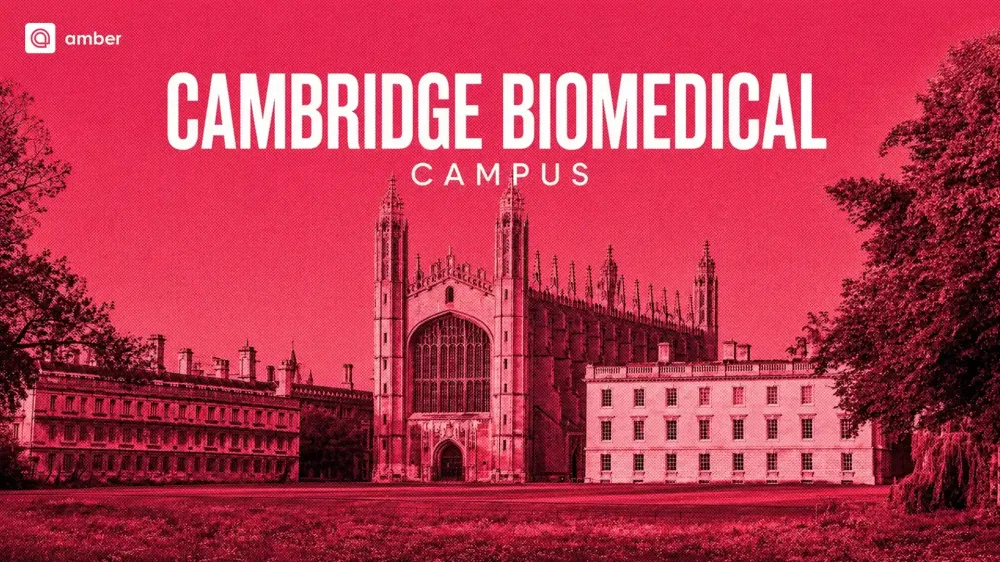
Cambridge Biomedical Campus Guide 2026
Where Medicine Meets Innovation.
Table of Content
- About Cambridge Biomedical Campus
- Why Cambridge Biomedical Campus Is Unique
- Cambridge Biomedical Campus Rankings
- Cambridge Biomedical Campus Courses
- Cambridge Biomedical Campus Undergraduate Courses
- Cambridge Biomedical Campus Postgraduate Courses
- Major Hospitals on the Cambridge Biomedical Campus
- Education and Medical Training at Cambridge Biomedical Campus
- Research Institutes and Innovation Centres at Cambridge Biomedical Campus
- Research and Clinical Trial Facilities at Cambridge Biomedical Campus
- Cambridge Biomedical Campus Eligibility Criteria
- Cambridge Biomedical Campus Undergraduate Eligibility
- Cambridge Biomedical Campus Postgraduate Eligibility
- Additional Requirements
- Cambridge Biomedical Campus Admission Process
- Cambridge Biomedical Campus Acceptance Rate
- Cambridge Biomedical Campus Tuition Fees
- Undergraduate Biomedical Courses Fees
- Postgraduate Biomedical Courses Fees
- PhD / Research Degree Fees
- Cambridge Biomedical Campus Scholarships
- Cambridge Biomedical Campus Student Life
- Cambridge Biomedical Campus Accommodation
- On-Campus Accommodation
- Off-Campus Accommodation
- Cost of Living in Cambridge
- Cambridge Biomedical Campus Notable Alumni
- Future Developments
- Conclusion
The Cambridge Biomedical Campus stands as one of the top global centres for healthcare research and educational programs and clinical research development. The campus situated in Cambridge unites scientific researchers and medical practitioners, educational institutions, healthcare facilities, and international biotechnology firms to speed up medical discoveries.
The campus is Europe's largest biomedical research and healthcare centre, providing a comprehensive ecosystem that integrates patient care, academic research, and business partnerships. More than 22,000 researchers, medical professionals, and staff members work at the campus, which serves as Cambridge's biggest employment centre.
About Cambridge Biomedical Campus
The Cambridge Biomedical Campus serves as a primary centre for healthcare and life sciences research in Cambridge. The campus contains prestigious medical facilities that include Addenbrooke’s Hospital and Royal Papworth Hospital, and advanced research laboratories and innovation facilities. A strong collaboration with the University of Cambridge facilitates the institution's conversion of scientific research into practical medical applications, which establishes it as a vital biomedical research universities in UK.
| Feature | Details |
|---|---|
| Location | Cambridge |
| Type | Biomedical research and healthcare campus |
| Established | 1962 |
| Employees | 22,000+ |
| Daily Visitors | 35,000+ |
| Annual Patients | 1 million+ |
| Focus Areas | Biomedical research, clinical care, and medical education |
Why Cambridge Biomedical Campus Is Unique
The university campus functions as a worldwide research centre because it brings together academic research, healthcare services, and industrial partnerships into one facility. The main benefits of this system include the following key points:
- The largest European biomedical research facility
- The system enables the creation of strong relationships between the two institutions.
- The system provides researchers with access to the top research institutions in the world.
- The system provides researchers with access to the most advanced medical research facilities.
- The system enables organisations to conduct medical research through the development of clinical testing partnerships.
- The two organisations maintain strong business relationships with the worldwide pharmaceutical industry.
The system enables scientists to transform their scientific findings into treatments which doctors can use with patients.
Cambridge Biomedical Campus Rankings
The Cambridge Biomedical Campus exists as a research and healthcare centre which operates medical programs and research institutes. The university is accredited by the University of Cambridge, which directly influences the university's worldwide rankings. The rankings demonstrate Cambridge's worldwide reputation as a biomedical research and educational institution which specialises in life sciences and medicine, and sustainability research initiatives.
| Ranking Body | Category | Rank |
|---|---|---|
| QS World University Rankings 2026 | Global University Ranking | #5 |
| QS World University Rankings 2026 | Life Sciences & Medicine | Top 3 Globally |
| Times Higher Education 2026 | World University Ranking | Top 5 |
| QS Sustainability Rankings | Sustainability | Top 30 Globally |
| U.S. News & World Report | Best Global Universities | Top 10 |
Cambridge Biomedical Campus Courses
The University of Cambridge School of Clinical Medicine at the University of Cambridge provides courses that connect to the Cambridge Biomedical Campus. The students have the option to study Medicine at Cambridge along with Genomic Medicine, Stem Cell Biology, and Clinical Medicine. Students start their specialised biomedical studies through undergraduate programs, while postgraduate study and clinical training lead to their advanced studies. The students acquire hands-on skills through their time spent in research laboratories and their clinical training at Addenbrooke's Hospital.
Cambridge Biomedical Campus Undergraduate Courses
The Medicine (MB BChir) program stands as the most popular degree program which prepares students to become doctors through scientific education. The Natural Sciences program offers students their first academic experience with biomedical subjects, which include genetics, pathology, pharmacology and physiology, before they choose their specialised field.
Be sure to apply before October 15th to meet the UCAS deadline for undergraduate students.
| Course | Degree | Duration |
|---|---|---|
| Medicine | MB, BChir | 6 years |
| Natural Sciences (Biomedical focus) | BA / MSci | 3–4 years |
| Veterinary Medicine | VetMB | 6 years |
| Psychological and Behavioural Sciences | BA | 3 years |
Cambridge Biomedical Campus Postgraduate Courses
The biomedical campus at Cambridge University provides multiple postgraduate programs through its research institutes and the Cambridge Stem Cell Institute, and biomedical departments.
The MB/PhD programme enables students to pursue clinical training and advanced biomedical research simultaneously.
Most University of Cambridge biomedical students start their studies in Natural Sciences or Medicine and later specialise in genetics, neuroscience, pharmacology, or pathology.
| Course | Degree |
|---|---|
| Genomic Medicine | MSt |
| Clinical Medicine | MSt |
| Stem Cell Medicine | MPhil |
| Translating Devices & Advanced Therapies | MPhil |
| Foundations of Clinical Psychology | MPhil |
| Clinical School MB/PhD Programme | MB, BChir + PhD |
| Stem Cell Biology | PhD |
Major Hospitals on the Cambridge Biomedical Campus
The campus provides essential healthcare services through its multiple advanced hospitals that operate on its premises.
Addenbrooke's Hospital:
- One of the UK’s leading teaching hospitals
- Specialises in trauma care, oncology, neurology, and transplant medicine
- Major site for clinical trials and experimental medicine
Royal Papworth Hospital
- Globally recognised heart and lung hospital
- Leading centre for cardiothoracic surgery
- Performs heart and lung transplants
The Rosie Hospital
- Specialist maternity hospital
- Advanced neonatal and maternal care
- One of the leading fertility centres in the UK
Education and Medical Training at Cambridge Biomedical Campus
The campus has a strong partnership with the University of Cambridge School of Clinical Medicine, one of the leading medical institutions in the world. Students and trainees benefit from direct access to hospital and research laboratory facilities, the opportunity to train alongside experienced doctors, and the chance to participate in real medical research projects. Additionally, they collaborate with pharmaceutical companies. This unique combination provides students with valuable experience in medical research development as part of their academic studies.
Research Institutes and Innovation Centres at Cambridge Biomedical Campus
The campus contains top biomedical research institutes, which conduct studies in genetics and cancer, neuroscience, and drug discovery. The major institutes at the university include:
- The MRC Laboratory of Molecular Biology
- The Cambridge Stem Cell Institute
- The Cancer Research UK Cambridge Institute
- The National Institute for Health and Care Research
- The Wellcome Trust
The institutions achieved major discoveries which advanced molecular biology, genetics, and cancer research.
Research and Clinical Trial Facilities at Cambridge Biomedical Campus
The campus supports an enormous number of research projects and clinical trials, which enhance patient treatment methods. The facility's primary components include:
- NIHR Cambridge Clinical Research Facility
- Biobanks and biomedical data centres
- Early-phase clinical trial units
- Translational research laboratories
Scientists and clinicians work together on more than 100 research projects which study cancer treatment methods, rare diseases, immunology, and genomics.
Cambridge Biomedical Campus Eligibility Criteria
The process for entering biomedical and medical degree programs at the university campus system operates under strict academic requirements which the University of Cambridge establishes.
Cambridge Biomedical Campus Undergraduate Eligibility
- The minimum requirement for admission requires students to achieve AAA results at A-levels or to present equivalent international qualifications.
- The mandatory subjects for students include Chemistry plus one additional subject from Biology, Mathematics, or Physics.
- All applicants need to reach the age of 18 before their course starts.
- The program expects students to demonstrate a solid academic foundation in scientific disciplines.
Cambridge Biomedical Campus Postgraduate Eligibility
- Candidates need to present a Bachelor’s degree, which they obtained with at least a 2:1 classification or an equivalent qualification.
- The candidate needs to demonstrate expertise in biomedical sciences, medicine, or related disciplines.
- Research experience may strengthen applications
Additional Requirements
- The medical programs require students to pass an admissions test, which includes the University Clinical Aptitude Test (UCAT).
- International students need to demonstrate their English language skills through tests like IELTS.
- Students should acquire work and research experience, which they should document as valuable for their application.
Cambridge Biomedical Campus Admission Process
- Students typically apply through the University of Cambridge admission system.
- Submit an application through UCAS for undergraduate programmes.
- Complete additional Cambridge forms, which include the Supplementary Application Questionnaire (SAQ).
- International students must obtain a UK Student Visa (formerly Tier 4), requiring a CAS from the University of Cambridge, financial proof, and supporting documents.
- Take the required admission tests, which include UCAT.
- Shortlisted candidates participate in academic interviews, which take place at Cambridge colleges.
- The final admission decisions depend on academic results, test scores, and interview performance.
Cambridge Biomedical Campus Acceptance Rate
The admission process for biomedical and medical programs affiliated with Cambridge University operates with strict selection criteria. The standard medical course admits approximately 280 students each year, while the graduate entry program offers 40 available places. The acceptance rate for biomedical and medical studies at Cambridge University remains low because the program requires students to compete with international applicants who meet high academic standards.
| Programme | Acceptance Rate |
|---|---|
| Medicine (MB BChir – Standard Entry) | ~10% |
| Graduate Medicine Programme | ~3% |
Cambridge Biomedical Campus Tuition Fees
The University of Cambridge connects its biomedical programs with the Cambridge Biomedical Campus, yet its tuition fees remain high because they still maintain global competitiveness. The investment proves value for students who gain access to superior research facilities and hospital clinical training through Addenbrooke's Hospital.
Undergraduate Biomedical Courses Fees
| Course | Degree | Annual Fees |
|---|---|---|
| Medicine | MB, BChir | £70,554 |
| Natural Sciences (Biomedical focus) | BA / MSci | £44,214 |
| Psychological & Behavioural Sciences | BA | £44,214 |
| Veterinary Medicine | VetMB | £70,554 |
Postgraduate Biomedical Courses Fees
| Course | Degree | Annual Fees |
|---|---|---|
| Genomic Medicine | MSt | £35,000 – £45,000 |
| Clinical Medicine | MPhil | £40,000 – £50,000 |
| Stem Cell Biology | MPhil | £38,000 – £48,000 |
| Translating Devices & Advanced Therapies | MPhil | £40,000 – £50,000 |
PhD / Research Degree Fees
| Course | Degree | Annual Fees |
|---|---|---|
| Stem Cell Biology | PhD | £31,000 – £40,000 |
| Clinical Neurosciences | PhD | £32,000 – £42,000 |
| Medical Science | PhD | £31,000 – £40,000 |
| Cancer Biology | PhD | £32,000 – £40,000 |
Cambridge Biomedical Campus Scholarships
| Scholarship | Coverage |
|---|---|
| Gates Cambridge Scholarship | Full tuition + living costs |
| Cambridge International Scholarship | Full or partial funding for a PhD |
| Cambridge Trust Scholarships | Tuition fee support |
| GREAT Scholarships | Partial funding for international students |
| NIHR Academic Clinical Fellowships | Funding for medical research training |
Cambridge Biomedical Campus Student Life
Student life at the campus combines academic achievement with the lively cultural atmosphere of Cambridge. The campus provides its students with access to multiple facilities, which include:
- The campus offers a historic academic atmosphere.
- The campus provides access to libraries, museums, and cultural institutions.
- The area features attractive parks and walking paths along the riverside.
- The campus provides students with access to cafés and areas for socialising.
The city of Cambridge provides residents with a combination of historical beauty and contemporary student amenities. The city has established itself as a cycling hub, which enables residents to travel throughout the area cost-effectively. Students frequently visit popular sites, which include the River Cam and the historic University of Cambridge colleges.
Cambridge Biomedical Campus Accommodation
On-Campus Accommodation
The Cambridge Biomedical Campus lacks university-style student housing because it does not provide traditional on-campus accommodation. The facility serves as a research and hospital complex which contains both institutes, laboratories, and medical facilities.
Off-Campus Accommodation
Students and researchers can find a variety of accommodation options near the campus. The campus area provides students and researchers with easy access to public transport, supermarkets, and cafés, which help them maintain their work and social activities. Students who want to find reliable housing options can use amber to discover safe and accessible student housing near Cambridge universities and research campuses. To list a few options:
- Master House, Cambridge: £650
- The Cam Foundry, Cambridge: £215
- Castle Hill Cambridge: £265
- Stellaris, Cambridge: £230
- Scholars View, Cambridge: £225
Cost of Living in Cambridge
Living expenses in Cambridge for students are generally more affordable than in London, but it is still considered moderately expensive. Students can reduce costs by cycling instead of using public transport, sharing accommodation, and taking advantage of student discounts. An estimated budget table is given below:
| Expense | Average Monthly Cost |
|---|---|
| Accommodation | £700 – £1,200 |
| Food & groceries | £200 – £300 |
| Transportation | £60 – £100 |
| Utilities | £100 – £150 |
| Leisure & personal expenses | £150 – £250 |
Cambridge Biomedical Campus Notable Alumni
An integral part of the biomedical research ecosystem at Cambridge is world-famous scientists. Cambridge University has a long list of alumni who have contributed heavily to the world of medicine.
| Scientist | Contribution |
|---|---|
| Francis Crick | Co-discovered the structure of DNA |
| James Watson | Co-discoverer of the DNA double helix |
| Sydney Brenner | Nobel Prize in Physiology or Medicine |
| Aaron Klug | Nobel Prize for crystallographic electron microscopy |
| John Gurdon | Nobel Prize for stem cell research |
Future Developments
The Cambridge Biomedical Campus keeps expanding because there are significant construction projects which will begin in the upcoming years. The future developments will bring the following projects to completion:
- Cambridge Children’s Hospital
- Cambridge Cancer Research Hospital
The upgraded Cambridge South railway station will enhance public transport access to the campus. The planned developments will enhance Cambridge's position as a worldwide centre for biomedical research and healthcare innovation.
Conclusion
To conclude, the Cambridge Biomedical Campus provides an exceptional biomedical sciences study environment which combines advanced research capabilities with excellent academic resources and extensive clinical training to support students working toward healthcare and life sciences degrees.
Frequently Asked Questions
What is the Cambridge Biomedical Campus?
The Cambridge Biomedical Campus is Europe’s largest biomedical research and healthcare centre, located in Cambridge.
Which organisations are based at the campus?
Major organisations include the University of Cambridge, Cancer Research UK, the Medical Research Council, and AstraZeneca.
How many people work at Cambridge Biomedical Campus?
Over 22,000 researchers, clinicians, and healthcare professionals work on the campus.
Which hospitals are located on the campus?
The campus includes Addenbrooke’s Hospital, Royal Papworth Hospital, and The Rosie Hospital.
Is the campus part of the University of Cambridge?
Yes, the university is closely linked to the University of Cambridge, but also includes hospitals, research institutes, and biotech companies.
More Blogs on Cambridge
If you loved this, here's what else you'll enjoy
Cost Of Living In Cambridge 2026: Affordable Or Expensive?
Top 20 Cambridge University Notable Alumni (Scientists, Celebrities & Leaders) in 2026
15 Best Cafes in Cambridge
Cambridge Scholarship: Eligibility, Details, and More
Oxford Vs Cambridge: Which One is Better in 2026?
Top 24 Best Restaurants In Cambridge 2026
20 things to do in Cambridge
Masters at Cambridge University: Top Courses, Eligibility, Fee
Cambridge University: History, Courses, Fees and Traditions
University of Cambridge Acceptance Rate and Strategies