
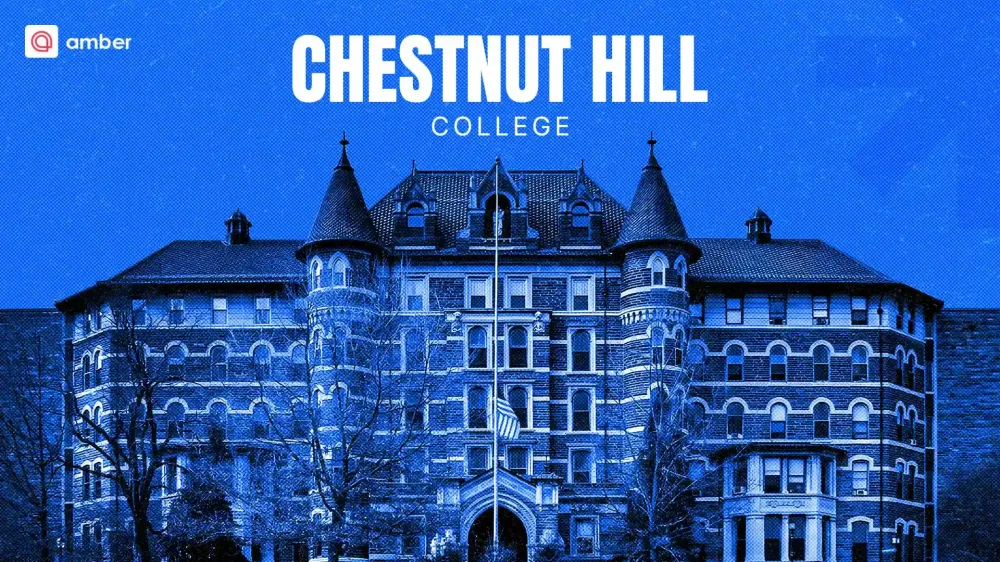
Chestnut Hill College: 2026 Admissions, Programs & Campus Life
Academic Excellence in a Close-Knit Community
Table of Content
Chestnut Hill College (CHC) is a private, Catholic college in Philadelphia known for its welcoming community and personalized education. The college offers various graduate and undergraduate programs across popular areas like business, education, health sciences, psychology, criminal justice, and technology.
Chestnut Hill College is a popular choice for students who value small class sizes, strong faculty support, and a campus that feels like home. With a student-to-faculty ratio of 10:1, students benefit from personalized attention and meaningful academic relationships. Chestnut Hill College acceptance rate of 98%, making it an accessible and welcoming option for a wide range of students.
In this blog, we’ll explore everything you need to know—from academics and housing to student life and opportunities—so you can decide if Chestnut Hill College is the right fit for you.
Discover Chestnut Hill College
Chestnut Hill College was established in 1924 by the Sisters of Saint Joseph as a Catholic, liberal arts college for women. It became coeducational in 2003, opening its doors to all students and expanding its tradition of academic excellence and personal growth. Students can find textbooks, supplies, and college gear at the Chestnut Hill College bookstore.
Under the leadership of the Chestnut Hill College president, the college continues to grow in academics and community impact. Here are a few things that make student life at Chestnut Hill College special:
47% of students identify as racially diverse, enriching classroom discussions and campus life with a wide range of perspectives.
33% of undergraduates are first-generation college students, underscoring the college’s commitment to access and support.
65+ student communities and activities give everyone a chance to get involved—whether in academic societies, service organizations, arts groups, or club sports.
80% of first-year students live on campus, creating a close-knit residential community from day one.
$38 million in scholarships are awarded each year, helping Griffins focus on learning and leadership rather than finances.
The campus is beautiful, with historic buildings, modern classrooms, and green spaces that create a peaceful and inspiring setting for learning and student life. Students enjoy a wide variety of clubs, activities, and a vibrant campus community that encourages involvement and helps build lasting connections.
Sports are a big part of life at Chestnut Hill College. The Griffins compete in NCAA Division II athletics, offering 18 varsity sports (soon to be 20 with the addition of women’s golf and women’s flag football). The college is known for its competitive Chestnut Hill College baseball teams and a strong sense of school spirit. Many students enjoy playing for the Chestnut Hill College softball team.
Chestnut Hill College Courses
Chestnut Hill College offers a wide range of undergraduate and graduate programs designed to prepare students for careers in business, science, education, health, technology, humanities, and more. Programs are available as majors, minors, certificates, and accelerated adult options.
Undergraduate Courses
Here are some of the popular majors offered at Chestnut Hill College:
Accounting
Biochemistry
Biology
Business Administration and Management
Business Communications
Chemistry
Computer and Information Sciences
Computer and Information Technology
Computer Systems Management
Criminal Justice
Cybersecurity
Digital Forensics
Early Childhood Studies
Education (including Secondary and Special Education)
English Literature and Writing
Forensic Chemistry
French
Health Sciences
History
Marketing
Political Science
Psychology
Religious Studies
Spanish
Sports Management
Women’s Studies
Graduate Programs
Here are the graduate programs offered at Chestnut Hill College:
Clinical and Counseling Psychology
Cybersecurity
Education
Human Services Management
MBA in Strategic Management
Montessori Education
Organizational Leadership
School Counseling
Chestnut Hill College Admission Requirements
Chestnut Hill College welcomes international applicants to its undergraduate and graduate programs. To ensure timely visa processing, the application and all supporting documents must arrive at least three months before the term begins.
Official CHC application (online or paper).
Academic records
U.S. schools: official transcripts.Non-U.S. schools: course-by-course credential evaluation from WES, ECE, or SpanTran (original copy required).English-language or standardized test scores:
| Test / Requirement | Minimum Score / Notes |
|---|---|
| TOEFL | iBT: 79–80 / CBT: 213 / PBT: 550 |
| IELTS | 6.0 (Undergraduate) / 6.5 (Graduate) |
| Duolingo English Test | 100 (minimum) |
| SAT / ACT | Accepted; School Code: 2082 |
| Waiver | May be waived if one U.S. semester completed with ≥ 2.0 GPA |
Financial Support Statement (FSS) plus a bank statement dated within six months or an official scholarship/government sponsor letter.
Copy of the passport information page (valid through your first year in the United States).
Optional: personal statement, letters of recommendation, or an admissions interview.
Enrollment deposit (to secure your place and generate the Form I-20)
$500 resident (on-campus)$300 commuter (off-campus)Non-refundable after May 1 (fall) or December 15 (spring).
Chestnut Hill College Application Process
Chestnut Hill keeps the application steps straightforward for international students:
Complete and submit the CHC application by the published deadline.
Send official transcripts (and credential evaluations, if applicable).
Submit required test scores (TOEFL, IELTS, Duolingo, SAT, or ACT).
Upload the Financial Support Statement and supporting bank or sponsor documents.
Provide a clear copy of your passport’s information page.
(Optional) Add a personal statement or recommendations for a stronger application.
Upon admission, pay the enrollment deposit to reserve your seat and receive the Form I-20.
Chestnut Hill College Application Deadlines
If you're planning to apply to Chestnut Hill College, it’s helpful to keep track of the important dates for each application cycle. Below is a breakdown of the key application deadlines to help you prepare.
| Item | Fall Semester | Spring Semester |
|---|---|---|
| Application due | June 1 | December 1 |
| Recommended final date to submit all materials | 3 months before start date | 3 months before start date |
| Deposit becomes non-refundable | May 1 | December 15 |
Tuition Fee at CHC
Before applying, it's helpful to know the Chestnut Hill College tuition. This section gives you a clear idea of how much you’ll pay each semester and what to expect in terms of Chestnut Hill College cost. It’s a useful step in planning your college budget.
| Fall 2025/Spring 2026 | Semester | Academic Year |
|---|---|---|
| Tuition (All SUS programs except ABSN) | $19,700 | $39,400 |
| Accelerated Bachelor’s in Nursing (ABSN)* | $17,640 | $35,280 |
| Student Activity Fee | $600 | $1,200 |
| Health Services Fee | $85 | $170 |
| Matriculation Fee (One-time fee) | $480 |
Graduate Tuition
| Master’s-Level | Tuition per credit |
|---|---|
| Clinical and Counseling Psychology (CCP) | $785 per credit |
| Education | $675 per credit |
| Educational Leadership | $500 per credit |
| Cybersecurity | $670 per credit |
| Human Services Management | $675 per credit |
| School Counseling | $715 per credit |
| Organizational Leadership | $675 per credit |
| MBA in Strategic Management | $325 per credit |
| Chestnut Hill College PsyD Program | $1,100 per credit |
Psy.D. Internship Courses (Applies to PSYI 991, 992, 993, 994, 995, 996, 997) | $550 per credit |
Chestnut Hill College Scholarships
Chestnut Hill College offers many scholarships to help students pay for school. Here are the key options, including how much they give and what you need to get them:
| Scholarship Name | Amount | Eligibility Criteria |
|---|---|---|
| Tichenor-Greer Scholars Program | $5,000/year + book stipend & support services (renewable for 4 years) |
|
| Interdisciplinary Honors Program (IDHP) | $5,000/year (renewable for 4 years) | Strong academic performance - Selected by the Admissions Office - No separate application required |
| Alumni Legacy Award | $2,000/year (renewable for 4 years) | New students with a parent, grandparent, sibling, or child who is a Chestnut Hill College alumnus |
| Legacy of Service Award | $1,000/year (renewable for 4 years) | First-year students who graduated from a Catholic high school |
| Chestnut Hill College Grant | Varies (need-based) |
|
| Athletic Grants | Varies |
|
| Endowed Scholarships | Varies |
|
| Amberscholar Scholarship | $2,000- $6,000 | Applicants must submit a compelling Statement of Purpose (SOP) that reflects their goals, values, and how the scholarship will support their journey. |
Best Student Housing Near Chestnut Hill College
Chestnut Hill College is located in the quiet, residential neighborhood of Chestnut Hill in Philadelphia. The area is known for its tree-lined streets, local shops, and easy public transportation to downtown. On campus, CHC offers a range of housing options in its residence halls, including single, double, triple, and suite-style rooms—each with its own style and atmosphere.
If you're looking for off-campus housing, amber can help you find comfortable and affordable options in nearby safe neighborhoods in Pennsylvania. They offer verified listings, easy booking, and support throughout the process.
Here are some popular housing options for CHC students:
Frequently Asked Questions
What types of programs does Chestnut Hill College offer?
CHC offers over 45 undergraduate programs and a range of graduate degrees in areas like business, health sciences, education, psychology, technology, and the humanities. There are also certificate and adult education options.
Is on-campus housing available for all students?
Yes, CHC provides on-campus housing through several residence halls with single, double, triple, and suite-style rooms. First-year, transfer, and international students are eligible to apply.
What financial aid or scholarships are available?
Chestnut Hill College offers merit-based scholarships, need-based grants (through FAFSA), and other awards like the Tichenor-Greer Scholars Program, Alumni Legacy Award, and athletic grants.
What are the admission requirements for international students?
International applicants need to submit an application, English-translated transcripts, English proficiency test scores (TOEFL, IELTS, or Duolingo), a financial support statement, and a copy of their passport. Optional materials include a personal statement and recommendations.
What is student life like on campus?
CHC offers over 65 student clubs and activities, NCAA Division II athletics, campus events, and a supportive community. About 80% of first-year students live on campus, helping create a strong sense of connection.
More Blogs on Philadelphia
If you loved this, here's what else you'll enjoy
Pennsylvania Academy of Fine Arts: Programs, Admissions & Alumni
Thomas Jefferson University: Admissions, Courses & More
Temple University Admissions Blueprint: From Application to Apartments
Top 10 Safest Neighborhoods in Philadelphia 2026
Cost Of Living In Philadelphia, PA: Live Big On A Small Budget
The Ultimate Philadelphia City Guide For International Students
Peirce College: Admissions, Tuition & Courses 2026
Moore College of Art and Design: Courses, Fees & Rankings 2026
Holy Family University Admissions & Financial Aid Guide for New Students
A Complete Guide to Saint Joseph’s University