
EU-UK Summit Puts EU Student Fees on a Six-Month Clock
Table of Content
Key Highlights
- The second EU-UK summit concluded negotiations on a Youth Experience Scheme offering 100,000 places per year to young people on each side for up to three years.
- EU student fees were left out of the summit package, with both sides committing to conclude a separate tuition fee agreement over the next six months.
- The proposed fee agreement will apply to EU students in the UK as well as UK students in the EU, irrespective of their immigration pathway.
- The youth scheme is set to enter into force jointly with the food and drink and carbon market agreements, with opportunities available no later than January 2030.
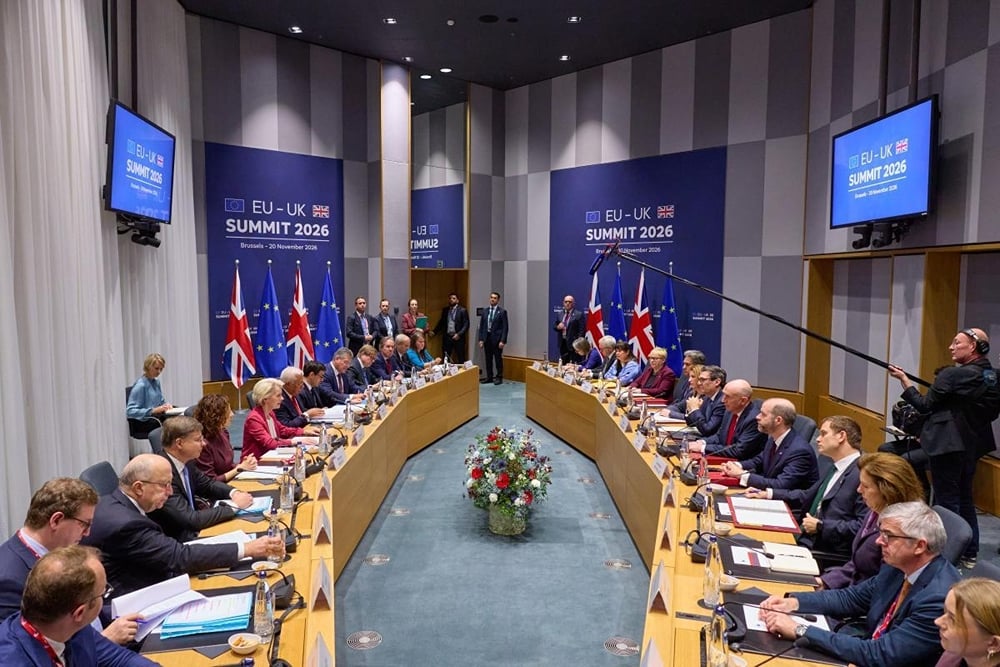
On 20th November 2026, the UK and the European Union (EU) concluded their second EU-UK summit in Brussels with a joint statement that opens a new route for young people but leaves EU student fees unresolved. As anticipated, leaders welcomed the conclusion of negotiations on a Youth Experience Scheme (YES) and committed to a separate agreement on tuition fees within six months.
The decision on fee status matters because the post-Brexit switch to international fees coincided with a sharp fall in EU students. From AY 2021-22, new EU students paid international fees and lost access to UK tuition fee loans, and EU entrants to UK higher education fell 53% that year, according to the Higher Education Statistics Agency (HESA). By AY 2024-25, they stood at 27,210, as set out in amber’s research note on post-Brexit student mobility.
Youth Scheme Opens 100,000 Places A Year Each Way
The joint statement confirms that the YES will allow 100,000 young people per year from the EU and the UK respectively to reside in each other’s territories for up to three years. During that time, participants may work, study, volunteer, travel or take up au pair placements. According to the UK government, the scheme is open to people aged 18-31 on the day their visa starts. Notably, the European Commission’s 2024 proposal had covered 18-30 year-olds for stays of up to four years.
Both sides aim to apply the agreement no later than 2028 and to make these opportunities available no later than January 2030. The statement also noted that the Erasmus+ funding call opened on 18th November 2026 and encouraged eligible institutions to apply.
The YES, however, is tied to two trade agreements that are still being finalised. The first, the Sanitary and Phytosanitary (SPS) agreement, would remove most of the certificates and border controls currently required on food, animal and plant products moving between Great Britain and the EU, and is set to apply from 1st March 2028. The second would link the UK and EU Emissions Trading Systems (ETS), the carbon markets that separated at Brexit, and exempt each side’s goods from the other’s carbon border tax, with both sides aiming to apply it from 2028. Since leaders have committed to the “joint and timely entry into force” of the package, the youth scheme is set to be enforced alongside them.
Tuition Fee Deal Set for Six-Month Deadline
The summit produced a commitment rather than an agreement in terms of fees. The EU and the UK will work towards “a supplementing agreement to the Trade and Cooperation Agreement on tuition fees for EU students in the UK and for UK students in the EU”, according to the joint statement. The agreement will apply “to all students from the other Party irrespective of the immigration pathway”, with negotiations due to conclude within six months from the date of the summit. The stated aim is “to increase opportunities for students to study in each other’s territories”.
The statement does not set out what fee level students will pay. Since AY 2021-22, new EU students have paid international fees, which each university sets and can range from £11,400-£38,000 a year. In contrast, the maximum home fee in England is £9,790 for AY 2026-27 under Department for Education regulations.
Implications for Universities and Student Housing
Since the YES includes studies, it would create a second route for young Europeans to study in the UK alongside the student visa. The fee agreement is designed to cover both, as it will apply to all students from the other side “irrespective of the immigration pathway”. The fee terms agreed within six months are therefore set to determine what EU students pay, whether they arrive through the YES or on a student visa.
The fee agreement will also interact with a new cost. From 1st August 2028, universities in England will pay an annual International Student Levy of £925 per student, with the first 220 students at each university exempt. EU students who remain on international fee status from AY 2028-29 would count towards the levy.
For accommodation providers, any recovery in EU demand would enter a market where investors are already repositioning. According to the European PBSA Investment Barometer published by Savills and The Class Foundation on 9th November 2026, the UK has climbed back up investors’ target locations, while Europe as a whole faces a shortfall of 3.1 million purpose-built student accommodation (PBSA) beds.
What to Watch Out For
- The fee level, the eligibility rules and whether negotiations conclude by the six-month deadline of 20th May 2027 are the next milestones for universities and accommodation providers.
- The legal process for the SPS, ETS and YES agreements will determine when the youth scheme opens, since all three are set to enter into force together.
- Currently, the joint statement is a political commitment, and both the YES and the fee terms still need legal agreements before they apply.
- HESA’s AY 2025-26 student data will set the baseline against which any change in EU recruitment is gauged.
(Writing by Kajol Mangtani, Editing by Shivani Singh)