
US Maintains Soft Power Lead in HEPI Index, UK Ranks Second
Table of Content
Key Highlights:
- The 2026 Soft Power Index report published by the Higher Education Policy Institute (HEPI) ranked the US at the top position, with 66 serving world leaders.
- The UK’s soft power was a close second with 60 leaders being educated in the country, at par with its highest ever total.
- Harvard University, University of Oxford and Royal Military Academy Sandhurst were the top three institutions in the index, together accounting for 34 different world leaders among their alumni.
- The recent dip in international enrolments in the UK and US, rising demand for domestic education in China and Russia and a shorter UK Graduate Route visa from 1st January 2027 could reshape future editions.
English-Speaking Nations Dominate the Soft-Power Index
On 28th September 2026, independent think tank HEPI published the tenth edition of its Soft-Power Index report which was sponsored for the first time by Cambridge University Press & Assessment. The Index found that 66 serving world leaders were educated in the US, making it the frontrunner for this edition. The UK was at second position with 60 world leaders, matching its previous record high. Notably, the UK has ranked ahead of the US only once, in the inaugural edition of this HEPI index in 2017.
France came third with 29 leaders, recovering from 26 in 2025. This was followed by Russia with 12, while Australia and India shared 5th place with 8 leaders each. HEPI observed that the strongest performers were either English-speaking, as with the US, the UK and Australia, or held a large historic sphere of influence, as witnessed with Russia and France.
Using soft power pertains to influence rooted in attraction and persuasion rather than economic sanctions or military coercion. International education often serves as a crucial tool for modern diplomacy. This HEPI Index counts monarchs, presidents, and prime ministers across 195 countries (UN members and observers) considering only those who went abroad for higher education. Studying at home, online or at a foreign institution’s local campus is not tabulated, while leaders educated in more than one country count towards each.
Harvard Tops the Table, Oxford Follows Closely
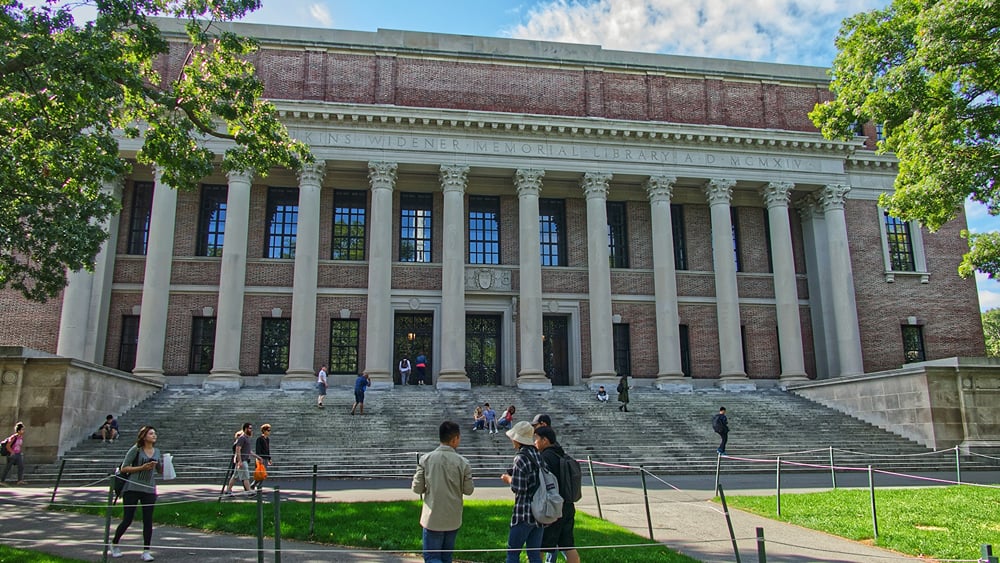
Harvard University has educated 16 current global leaders, the most of any institution, but British institutions filled every other place in the top 5. University of Oxford was the only other institution with more than 10 leaders, and Oxford and Cambridge collectively educated 17 leaders, edging past Harvard.
The top 3 institutions (Harvard University, Oxford University and Royal Military Academy Sandhurst) educated 34 different leaders in total, since Canada’s Mark Carney attended both Harvard and Oxford while Jordan’s King Abdullah II is an alumni of both Oxford and Sandhurst. HEPI’s methodology also shaped this indexation since it excluded federated bodies such as the University of London. Its inclusion of military training also accounts for Sandhurst’s third position.
UK’s overall dominance in this category underscores the international students the country's institutions have hosted for generations. Currently, UK-educated leaders include heads of state from Bahrain, Bhutan, Canada, Jordan, Singapore, and Zambia.
Beyond the UK-US Comparison
While the UK and US universities still maintain their lead, international student numbers have been dipping on both sides. While China's international students numbers are currently short of its 2018 peak, AY 2024-25 saw a near 100% jump since its 2021 low during the covid-19 pandemic. HEPI has also reported rising numbers of foreign students in Russia and falling numbers in Australia.
UK universities heavily rely on international fees. Data from the Higher Education Statistics Agency (HESA) showed 685,565 international students in AY 2024-25, down 6% year-on-year. HEPI put the split at 297,000 undergraduates and 389,000 postgraduates and noted that their fees cross-subsidised most other university activity. However, perception management and goodwill is still a work in progress. The HEPI report cited a 2024 study in which some Chinese students felt treated as revenue sources, and one former student urged universities not to see them as “cash cows”. It also cited research indicating that some alumni warmed to the UK only in the years after graduating.
Tighter UK Rules May Threaten Future Position
The HEPI has argued that UK policy was working against the government’s own soft-power ambitions. The May 2025 immigration white paper set out several measures including tougher compliance checks for international students UK universities recruit, an international student levy of £925 per annum and a shortening of the Graduate Route visa from two years to 18 months. These measures followed the January 2024 ban which prohibited most master’s students from bringing dependants. The HEPI report described these restrictions as “reckless” and warned that the damage would surface in years to come. Although the HEPI Index will take years to register these changes, the pool of UK-educated graduates from which future leaders emerge is already shrinking.