

Berkshire House, Reading

Offers
About the Property
Looking for the best accommodation for students in Reading? Say hello to Berkshire House, the perfect place to call home!
This stylish, modern accommodation is just a 12-minute public transport ride from the University of Reading, making it super easy to get to your lectures, whether it’s for an early morning seminar or a late-night study session.
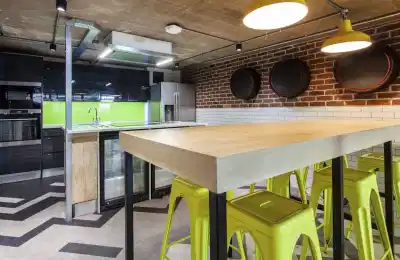
At Berkshire House, student life is made easy with fantastic amenities designed just for you.
Amenities
Shared Community And Utilities
Fitness And Recreation
Security
Property Services
Outdoor Features
Bills Included
Room Types (4)
Studio
Superior Studio
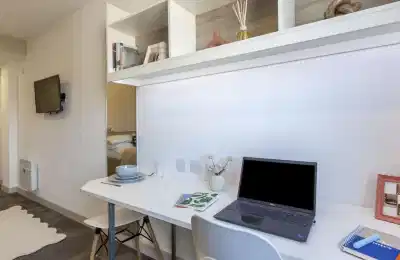
The Superior Studio combines practicality with comfort. It features a small double bed, ensuite bathroom, and a kitchen equipped with a 2-ring hob, combination microwave, and fridge with freezer compartment. The room also includes a large desk and chair for study sessions, a full-length mirror for daily routines, and a noticeboard to stay organised. A 32″ flat screen TV and built-in wardrobe round out this well-balanced space for independent living. Book your Superior Studio now.
House Rules
Payment and Fees
Security Deposit
The tenant has to pay a security deposit to book this property; the amount may vary as per the room selection. Note: The security deposit will be refundable. If there is any damage to the room or communal area, the amount will be deducted from the security deposit.
Additional Fees
Dual occupancy is available for most rooms that are 23sqm or larger. The total rent will be calculated as the standard room rate plus an additional £50 per week. Both applicants must apply separately and clearly state in their applications that they are requesting dual occupancy.
Guarantor Requirement
A guarantor is required when the student is paying in installments. A guarantor must qualify for the following criteria Be a resident in the UK for a minimum of 1 year Be over 21 years of age Be a homeowner or in full-time employment Provide a copy of photographic identification, such as a passport, driving licence or ID badge Provide a copy of proof of your UK address, which must be less than 3 months old, such as a utility bill (e.g., electricity, water, gas, telephone), a bank statement, or a Council Tax bill. The property also accepts housing hand. Note: The property does not accept other Guarantor Service Providers.
Mode Of Payment
Credit/debit card, bank transfer, and Flywire. Flywire payment options include Open Banking, Google Pay, Apple Pay, WeChat Pay, and others (Country/region-dependent). Note: The property does not accept cash.
Pay In Instalment
If the student has a UK-based guarantor or housing hand, The student can pay in 3 installments. Full payment 3 installment 4 installment If the student does not have a UK-based guarantor The student must pay the rent in full Note: In case the student is paying in installments, then the property will ask for the initial payment 3 weeks before check-in If the student is paying in full, the property will ask you to pay 6 weeks before the date your tenancy commences. Note: The instalment plan may vary as per the room and tenancy selection.
Meet the Residents
Frequently Asked Questions
Is dual occupancy available?
Can I make a special request when applying for a room?
Can I book a room if I’m under 18?
Can I have a package delivered before I arrive?
Is parking available at the property?
What do I need to bring when picking up my keys?
When will I get my deposit back?
Is my deposit protected?
Are virtual viewings available?
What can I expect during a viewing?
How long does a viewing take?
Do I need to pay Council Tax?
Are pets allowed?
Is room cleaning available?
What are emergency numbers in the uk?
To contact the emergency services (Fire Service, Police, Ambulance and Coast Guard) dial 999
For non-emergency police assistance call 101
When should I use 101?
You should call 101 to report crime and other concerns that do not require an emergency response. For example:
- Your car has been stolen
- Your property has been damaged
- You suspect drug use or dealing in your neighbourhood
- Give the police information about crime in your area
- Speak to the police about a general enquiry
You should always call 999 when it is an emergency, such as when a crime is in progress, someone suspected of a crime is nearby, when there is danger to life or when violence is being used or threatened.
To contact the NHS for non-emergency medical advice and assistance, dial 111
When should use 111?
You should use the NHS 111 service if you urgently need medical help or advice but it's not a life-threatening situation.
Call 111 if:
- you need medical help fast but it's not a 999 emergency
- you think you need to go to A&E or need another NHS urgent care service
- you don't know who to call or you don't have a GP to call
- you need health information or reassurance about what to do next
For less urgent health needs, contact your GP or local pharmacist in the usual way. If a health professional has given you a specific phone number to call when you're concerned about your condition, continue to use that number. For immediate life-threatening emergencies, continue to call 999.
Where is Berkshire House located?
How many students live at Berkshire House?
How big are the rooms at Berkshire House?
Is there a gym for students?
How far is Berkshire House from Reading town centre and the Oracle Shopping Centre?
Are there parks and green spaces nearby?
What facilities are on site at Berkshire House?
Berkshire House, Reading
