
£20 cashback on the app!
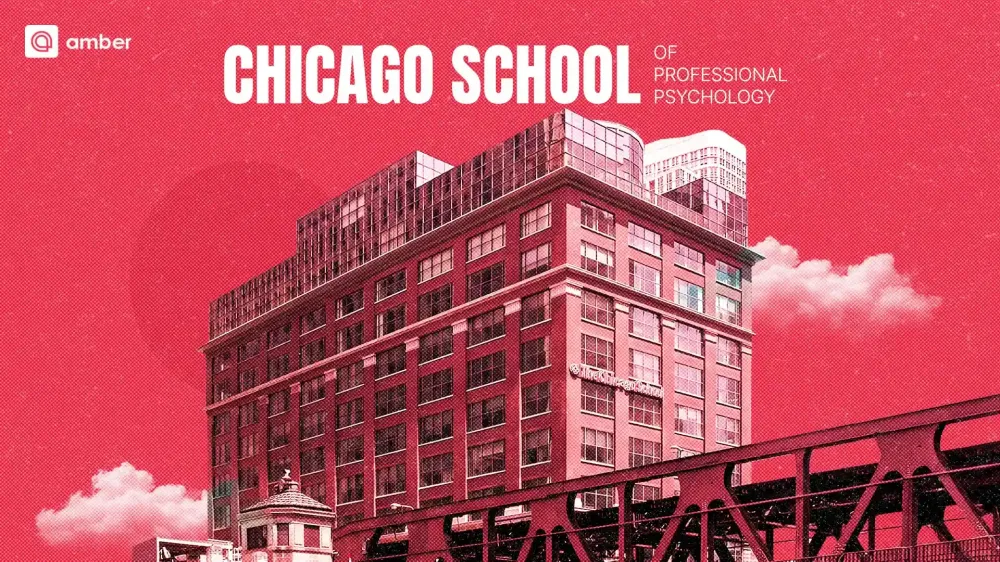
Chicago School of Professional Psychology Overview 2026
Become a licensed psychologist, join the Chicago School of Professional Psychology!
Table of Content
- About the Chicago School of Professional Psychology
- Quick Facts from U.S. News & World Report:
- Chicago School of Professional Psychology Courses
- Chicago School of Professional Psychology Admission Requirements
- International Applicants
- Chicago School of Professional Psychology Application Deadlines
- How to Apply to the Chicago School of Professional Psychology
- Chicago School of Professional Psychology Tuition Fees
- Scholarship Opportunities at the Chicago School of Professional Psychology
- Affordable Student Housing Near the Chicago School of Professional Psychology
Dreaming of studying psychology in a city that never sleeps? The Chicago School of Professional Psychology (TCSPP) might be the perfect place for you. Since 1979, this nonprofit institution has offered graduate and undergraduate programs in the heart of the Windy City, Chicago. The psychology degrees at TCSPP are accredited by the American Psychological Association (APA) and the Master's in Psychology and Counseling Accreditation Council (MPCAC).
At TCSPP, you’ll gain real-world experience through practicums and externships, join a diverse community of learners, and develop the skills to thrive as a clinician, counselor, or mental health leader. In this guide, we’ll walk you through everything you need to know about psychology courses at TCSPP.
About the Chicago School of Professional Psychology
The Chicago School of Professional Psychology began in February 1979, founded by a group of psychologists and educators dedicated to experiential learning in a nonprofit environment. A charter member of The Community Solutions Education System, The Chicago School supports a diverse, nationwide network. Its students and faculty contribute varied perspectives to collaborative capstone projects, applied research, and service initiatives, preparing graduates to be agents of change in their fields.
The Chicago School of Professional Psychology is widely regarded as one of the best graduate schools in Chicago for psychology. Students at The Chicago School thrive in a dynamic academic environment and benefit from housing facilities situated in a city that inspires them daily. Located in the heart of downtown Chicago, the campus offers easy access to iconic sites like Millennium Park and the Riverwalk. Cultural landmarks such as the Field Museum and the Chicago Cultural Center enrich students' academic journeys. The Chicago School of Professional Psychology DC campus offers a prime location for students interested in public policy and clinical practice.
Some of the popular programs at the ChicagoSchoolofProfessionalPsychology include bachelor’s and master’s degrees in fields like psychology, mental health, and behavioral sciences. From counseling to organizational leadership, each course’s curriculum and practical learning prepare students to become trained professionals. As part of the curriculum, the Chicago School of Professional Psychology SPSS coursework builds confidence in analyzing psychological data.
Quick Facts from U.S. News & World Report:
Before applying, many students check the Chicago School of Professional Psychology reviews to learn about campus life and academics. Here are some of the quick facts:
Total Enrollment: 1,296
Graduate Enrollment: 1,262
Undergraduate Enrollment: 34
Acceptance Rate: 71%
Minority Enrollment: 7%
Chicago School of Professional Psychology Courses
The Chicago School of Professional Psychology offers various psychology masters programs in fields like forensic psychology, applied psychology, and counselling psychology, among others. Additionally, it offers an undergraduate program in psychology and a few phd in psychology courses. These degree programs are listed below:
| Degree Program | Delivery Type | Mode | Tuition/ Credit hour |
|---|---|---|---|
Bachelor of Psychology (B.A.) | Online and in-person | Full time: 4 years Part-time: 8 years | $566 |
| Master's in Applied Forensic Psychology (M.A.) | Online | 36 credits, 12 terms | $1,458 |
| Master's in Applied Psychology | Online | Part-time: 16 months | $1,458 |
Master's in Counselling Psychology (M.A.) | In-person | Full time: 2 years Part-time: 4 years | $1,458 |
| Forensic Psychology Master's programs | Online and in-person | Full time: 2 years Part-time: 3-4 years | $1,458 |
| M.A. International Psychology | Online | Full time: 2 years | $1,458 |
| Psy.D. Applied Clinical Psychology | Online | Full-time: 3 years | $1,815 |
Chicago School of Professional Psychology Admission Requirements
To apply for psychology degrees and certification programs at the Chicago School of Professional Psychology, you can go through the following Chicago School of Professional Psychology admission requirements checklist:
1. Bachelor’s Degree: Earned from a regionally accredited institution (minimum undergraduate GPA score of 3.0; some PsyD programs require 3.2 or higher)
2. Official Transcripts: From every college/university attended.
3. Resume or Curriculum Vitae: Detailing relevant academic, work, or volunteer experience.
4. Personal Statement or Admissions Essay: Articulating professional goals and fit with the program.
5. Letters of Recommendation: Two to three letters of recommendation from academic professors or professional/volunteer supervisors.
6. Interview: An admissions interview, either in person or via video conferencing, is required for most doctoral programs.
7. Prerequisite Coursework (for PsyD Psychology): One course in psychology plus one in statistics or research methods (grade of C or better)
8. Graduate Record Examination (GRE): Required for certain doctoral programs; scores sent to School Code 1119 (waived in some cases).
9. Credential Evaluation: Course-by-course evaluation by a NACES or AICE-approved service, indicating U.S. degree equivalency and GPA
10. Financial Documentation: Bank statements or sponsor letters sufficient to process Form I-20/DS-2019
International Applicants
International students applying to any level must demonstrate English language proficiency through one of the following test scores:
Official scores from one of the approved exams (valid for two years). Waived if prior degree was taught in English or from an English-medium institution.
Test | Undergraduate Programs | Graduate Programs |
|---|---|---|
Internet-based test: 61 Paper-based test: 500 Computer-based test: 173 | Internet-based test: 79 Paper-based test: 550 Computer-based test: 213 | |
IELTS | 5.5 | 6.5 |
| PTE Academic | 44 | 53 |
Duolingo English Test | 95 | 110 |
Chicago School of Professional Psychology Application Deadlines
The psychology classes online at the Chicago School of Professional Psychology follow a rolling admission policy, and applications open for them every 8 weeks. However, the campus courses start every 16 weeks, and you must apply early, considering your visa timeline.
The deadline for the academic year 2025-2026 is:
Term | Date |
|---|---|
| Spring I 2025 | January 6, 2025 |
Spring II 2025 | March 3, 2025 |
| Summer I 2025 | May 5, 2025 |
Summer II 2025 | June 30, 2025 |
| Fall I 2025 | August 25, 2025 |
| Fall II 2025 | October 20, 2025 |
How to Apply to the Chicago School of Professional Psychology
To help you go forward with the application process at the Chicago School of Professional Psychology, here is a complete guide to the college application for bachelor's and masters in psychology degrees:
1. Request Information: Fill out the inquiry form to get program details and connect with an International Admissions Counselor.
2. Schedule a Consultation: Meet virtually or by phone to discuss your goals, questions, and timeline.
3. Begin Your Application: Complete the online application and pay the $50 fee. View program deadlines to plan.
4. Upload Required Documents: Submit your academic transcripts, resume/CV, essays, letters of recommendation, and credential evaluation (if needed) through the applicant portal.
5. Upload Bank Statements: International students should prepare bank statements for F1 visa purposes.
6. Interview (If Required): Participate in an admissions interview, often required for doctoral‐level programs.
7. Receive Decision: You will be notified of the admissions decision by email. Accepted applicants to US schools begin visa procedures, while online students pay a tuition deposit to ensure their position.
Chicago School of Professional Psychology Tuition Fees
The tuition fee for the Chicago Professional Psychology school for the current academic year varies for various degree programs, as listed below:
Degree Type | Tuition Fees Per Credit Hour |
|---|---|
| Psy.D. | $1,815 |
M.A./M.S. | $1,458 |
| Ed.S. | $1,499 |
B.A. | $566 |
*Tuition Fees are subject to change and might vary each year/intake
Scholarship Opportunities at the Chicago School of Professional Psychology
The Chicago School of Professional Psychology supports international students and meritorious learners by providing them with discounts on the total tuition fees each term. The scholarships listed below represent the college’s commitment to building an inclusive and multicultural ecosystem on the campus:
Scholarship Name | Amount | Eligibility |
|---|---|---|
| Global Impact Scholarship | 15% off on tuition fees each term | Full-time international undergraduate and graduate student Minimum 3.5 GPA Maintain a ≤ 3.0 GPA |
Global Partners Scholarship | 20% off on tuition fees each term | Full-time international undergraduate and graduate students Must be enrolled with/employed by the MOU sharing institute |
| Global Leaders Scholarship | $1,000 | Former international student Enrolled in an on-campus fall program Past scholarship winners |
Local Advantage Scholarship | 25% off on tuition fees each term | International transfer student Maintain a good score post-transfer |
| Amber Scholar Scholarship | $2,000-$6,000 | A compelling Statement of Purpose (SOP) by college students planning to study in the UK, USA, Canada, or Ireland |
Affordable Student Housing Near the Chicago School of Professional Psychology
The Chicago School of Professional Psychology provides various on-campus housing options for international students. However, many students seeking a complete Windy City experience choose off-campus student residence Chicago. It offers them more freedom, cost, and, neighborhood variety in Chicago. River North, Streeterville, Lincoln Park, and Lakeview are convenient locations for the downtown Chicago campus and various practicum sites. The city offers you diverse housing options, from sophisticated high-rise apartments to beautiful vintage flats with modern facilities.
Amber provides a list of off-campus possibilities close to TCSPP to help you narrow down your search. You can browse safe and affordable residences close to classes, labs, and Chicago's attractions.
Check out these housing properties perfect for TCSPP students:
- Lake Meadows Apartments, Chicago
- Infinite Chicago, Chicago
- Prairie Shores Bronzeville, Chicago
- The Letterman, Chicago
- Post, Chicago
Frequently Asked Questions
How difficult is it to get into the Chicago School of Professional Psychology?
In 2024, approximately 24.3% of applicants, which means 170 out of 700 students, were admitted. Some specific programs, however, may be more selective, with the Chicago School of Professional Psychology acceptance rate as low as 7%.
Would you classify the Chicago School of Professional Psychology as a public or a private institution?
The Chicago School of Professional Psychology is a private, nonprofit institution. It is not government-funded or controlled and focuses on graduate and undergraduate programs in psychology and related fields.
What support is available for students with disabilities at The Chicago School of Professional Psychology?
If you have a documented disability, the Office of Student Accessibility can set up personalized accommodations, like extra exam time, alternative test formats, note-taking help, and other reasonable adjustments, to ensure you learn on an even playing field.
How do I secure a student visa after acceptance?
Once you’re admitted, TCSPP will send you an I-20 form. Use it to apply for your F-1 visa at a U.S. embassy or consulate. Begin early, gather documents, schedule your interview, and allow ample processing time.
Is a criminal background check required?
Yes, every degree-seeking student and most certificate candidates must pass a criminal background check before starting classes. Your International Admissions Counselor will walk you through each step of the process.